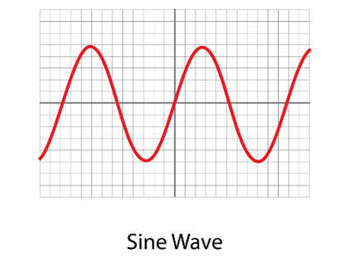
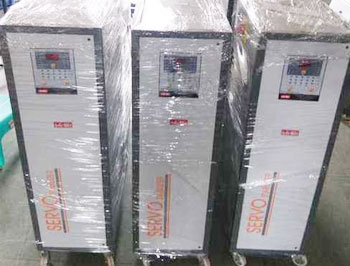
-

-

Mail Us
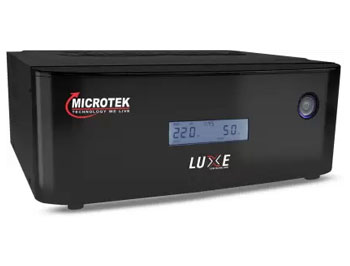
An inverter is one of the most frequently used electronic circuits in most of the applications. It's a circuit that converts fixed DC supply to alternating AC supply to feed AC loads. Widely used in residential applications. It could be regarded as the backbone for most of the applications. It is frequently used as an interfacing unit between DC supply and load. In many cases, it acts as an interfacing unit between AC supply and load also. AC supply is converted to DC by a rectifier circuit and again DC is converted to AC by inverter and fed to the load.
What is an Inverter?
Definition: The inverter is an electronic circuit that converts fixed DC supply to variable AC supply. The inverter is used to run the AC loads through a battery or control AC loads via AC-DC conversion. Inverters are also available as single-phase inverter and three-phase inverters. Of course, in three-phase inverter more switching operations are required. Let see the circuit diagram and working principle of single-phase and three-phase inverters.
Single Phase Inverter: A single-phase inverter or also called as half-bridge inverters, converters DC supply to single-phase AC supply. For this purpose, two switching devices are used to convert DC to AC. Diodes, capacitors help the circuit to operate smoothly.